Desk Decorating Ideas for a Spooky Office Cubicle
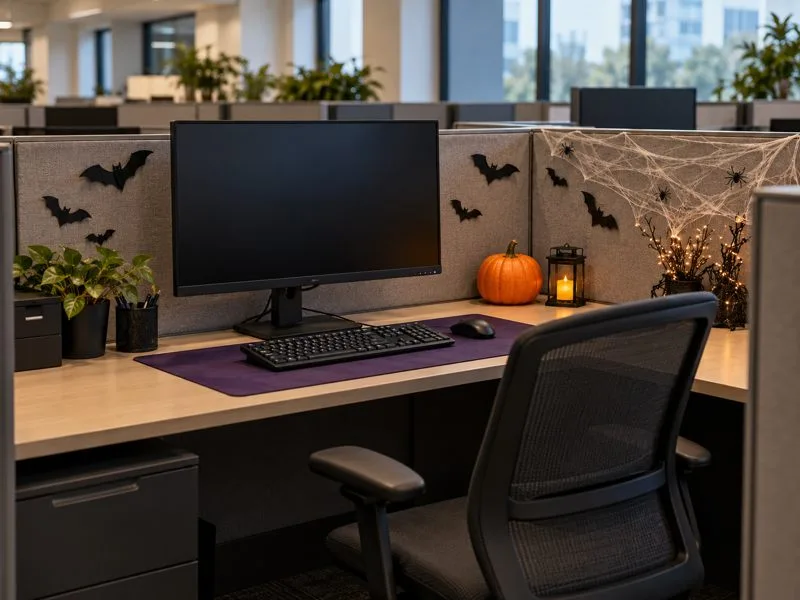
Create a spooky office cubicle with Halloween desk decor ideas that keep your workspace usable, tidy, and mindful of workplace safety.
Mastering Word's Styles feature can dramatically improve the quality of your work, whether you're creating a business report, an academic paper, or a personal project. The good news is that they're really easy to use.
What are Styles in Word? How are they useful?
Styles in Microsoft Word are predefined formatting options that you can apply to different text elements in your document, such as headings, paragraphs, lists, and quotes. A style combines different formatting settings, such as font type, size, color, alignment, and line spacing.
Using Styles, you can easily maintain a consistent look throughout your document. For example, if you apply the "Heading 2" style to your chapter titles, they will all automatically have the same font, size, and color, ensuring a consistent, professional look. This also allows you to create an automatically updating table of contents.

Using Styles not only eliminates the need to format individual text, it also streamlines future formatting changes. This means that if you need to adjust the look of a heading, paragraph, or other element later, all you have to do is edit the style and Word will automatically update all instances of that style throughout the document.
Apply built-in styles
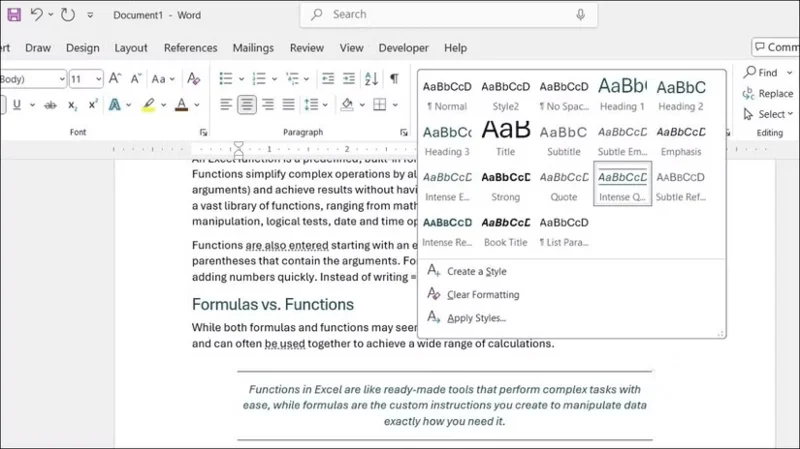
Microsoft Word includes many built-in styles that streamline the formatting process. You can find styles for headings, paragraphs, lists, quotes, and more, allowing you to format different elements of your document with just a few clicks. Here's how to apply them:
Modify a style
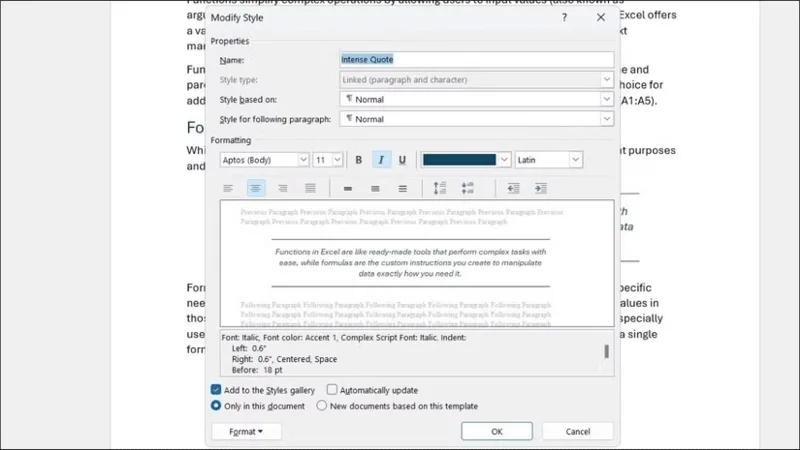
Microsoft Word allows you to modify built-in styles to suit your specific formatting needs. You can adjust everything from basic formatting options, such as font, size, color, alignment, and spacing, to borders, numbering, text effects, and more. The best part is that once you modify a style, Word automatically updates every instance of that style throughout the document.
To modify a style in Word:
Create custom style
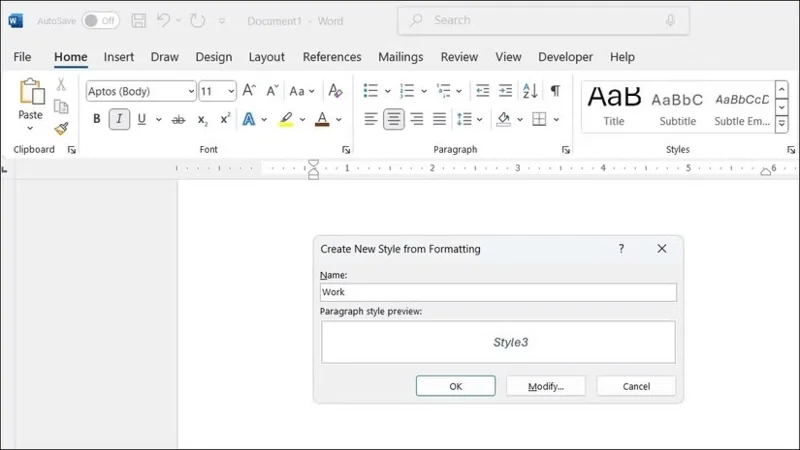
If the built-in styles in Word don't meet your needs, you can also create a custom style that suits your specific preferences. Here's how:
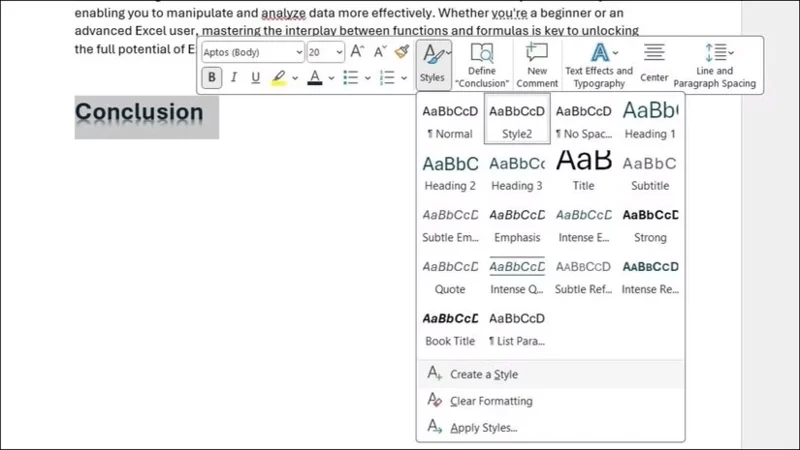
Alternatively, you can manually enter and format text, then save it as a style. To do this, select the formatted text, right-click it, and select Styles > Create a Style . Type the name you want for the style and click OK . Your saved style will appear in the Styles group, allowing you to apply it like any other style.
Tips for using Styles effectively
Now that you know how to apply, modify, and create styles in Microsoft Word, here are some tips to help you use them effectively.
Apply style with shortcut key
While applying styles through the Styles pane is efficient, using keyboard shortcuts in Word can save you even more time. This approach is especially useful for repetitive formatting tasks.
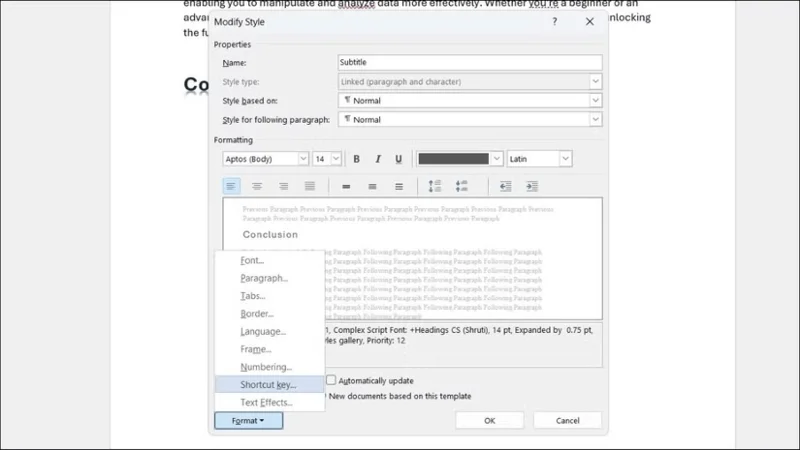
For example, pressing Ctrl + Alt + 1 will apply the Heading 1 style, while Ctrl + Alt + 2 will apply Heading 2. You can also assign your own shortcut key to a style. To do this, right-click the style, select Modify , and click Format > Shortcut key .
Use Heading style to move sections
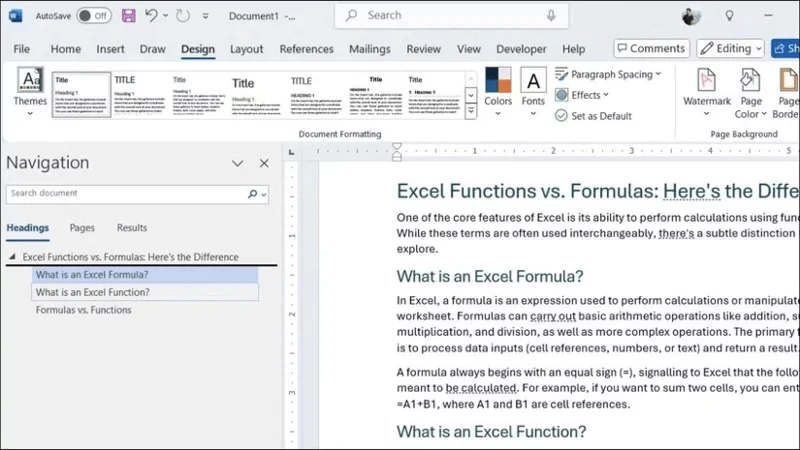
One of the benefits of applying heading styles is that they integrate with Word's Navigation pane. By using heading styles (like Heading 1, Heading 2, etc.) for your sections, you can easily structure your content without having to manually cut and paste text.
To do this, press Ctrl + F to open the Navigation pane and switch to the Headings tab . From here, you can drag and drop entire sections to move them around.
Quickly find where to apply style
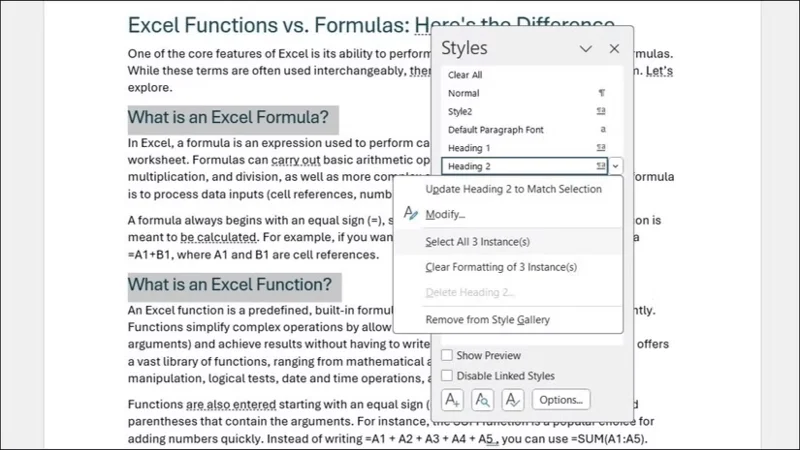
Microsoft Word also makes it easy to see where a particular style is currently applied in your document. To do this, press Ctrl + Shift + Alt + S to open the Styles pane, then click Options. Next, use the drop-down menu under "Select styles to show" and select In use .
You can then see where a style is applied by clicking the arrow next to it and selecting Select All X Instances . Doing so will highlight every instance of the style in your document, allowing you to adjust them all at once.
Create a spooky office cubicle with Halloween desk decor ideas that keep your workspace usable, tidy, and mindful of workplace safety.
Plan a recognizable Halloween 2026 look with pop culture costumes inspired by Spider-Man, Supergirl, Toy Story 5, Moana, Mario, and Wednesday.
Sort leftover Halloween candy safely, share or repurpose sealed treats, and choose food use or compost for pumpkins based on their condition.
Compare workplace Halloween costume choices by respect, dress code, mobility, and safety—and learn when a subtle accessory or a policy check is the better option.
Find a couples costume that fits your style, budget, and comfort level, from Addams Family classics to original inside-joke duos.
Need a last-minute high school Halloween costume? Compare 10 easy closet-based ideas by prep time, comfort, school-day practicality, and simple safety checks.
Use a simple 2026 Halloween decorating timeline for indoor décor, outdoor displays, and fresh pumpkins, with practical adjustments for weather and events.
Mix five vivid, approachable Halloween cocktails with measured recipes, simple prep tips, and an alcohol-free option for your party guests.
Find 15 office-friendly Halloween costume ideas for 2026, with practical checks for dress codes, respectful themes, comfort, and workplace safety.
Plan a fun elementary school Halloween party with easy crafts, games, inclusive treats, costume tips, and a sample 75-minute classroom schedule.