Pop Culture Costume Ideas That Will Dominate Halloween 2026

Plan a recognizable Halloween 2026 look with pop culture costumes inspired by Spider-Man, Supergirl, Toy Story 5, Moana, Mario, and Wednesday.
There are many editors available to programmers, but Notepad ++ is still one of the top alternatives to Notepad . Not only is it free and rich in features, but it also supports many different programming languages like .html, .css, .asp, .bash, .js ... and more. The following article will introduce you the best tips for using Notepad ++ for beginners.
First, to use NotePad ++ on your computer, you need to download the Notepad ++ application to your computer, the latest version of Notepad ++ can be downloaded immediately by the following link:
It can be said that this is one of the most time-saving features of Notepad ++. It allows you to repeat a task without having to do it again. You can replace a certain text in different files and save them into a specific format, just record the whole process and redo that task whenever you want. To record a Macro, go to the Macro section on the navigation menu of Notepad ++.
Let's assume that you wrote a few lines of code in HTML and CSS. Currently, you want to check the look of that page without having to view it on an online website. You have 2 options:
First, save the line of code with the corresponding extension (here .html) and open the file with any web browser.
Or second, you just need to run that code in a specific browser. To do that, write that code, select Run> Launch in Firefox ( IE , Chrome or Safari ... ) . As a result, the page will open directly in the web browser of your choice.
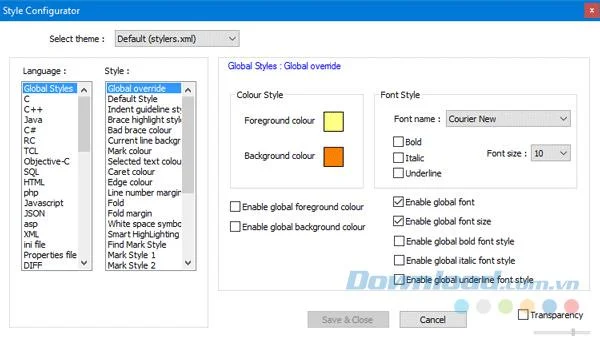
If you want to customize Notepad ++'s fairly boring default interface, you can do it without installing additional third-party software or plugins. It allows you to change the theme, font type, font size, color, background ... If the computer has installed a font from a third party, you can still use it as a font. Default text in Notepad ++. To change the interface, click Settings> Style Configurator , then select the interface you want.
If you don't like the default theme of Notepad ++, you can create your own according to your liking and set it as the default theme. The basic requirement is that you must save the file under the .xml extension bullets and place it in the following folder:
C: \ Users \ your computer name \ AppData \ Roaming \ Notepad ++ \ themes
Do not forget to replace user_name with the name of your computer, then click on Settings> Style Configurator and select the theme in the Select Theme section.
In case you have a folder full of code and need to open a specific file, instead of having to search for time, you can click on File and check the recently opened file. You can have up to 15 files in a list. If you want to increase or decrease the number of recently opened files, go to Settings> Preferences , under Recent Files History , you will see the option to change the number.
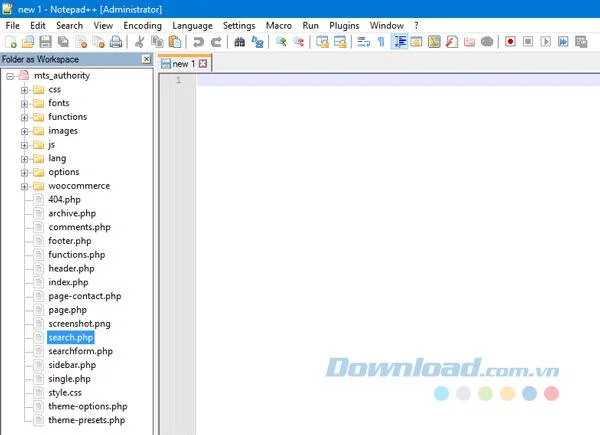
If you are developing a theme, there will definitely be many files created, moreover, you have difficulty opening and closing different files in a specific directory.
If you're working on Notepad ++ and you find it annoying that you have to keep opening and closing multiple files in the same folder, you can use Folder as Workspace. This is a feature that allows users to view all files and folders in a tree. If you want a menu bar on the left hand side to facilitate opening a specific file and folder, simply click File> Open Folder as Workspace and select the folder you want to display on the tree diagram.
If you want to open all files in a folder at once in Notepad ++, just open a folder, select all the files and press Enter or click File> Open Containing Folder> Explorer , select the file and press Enter .
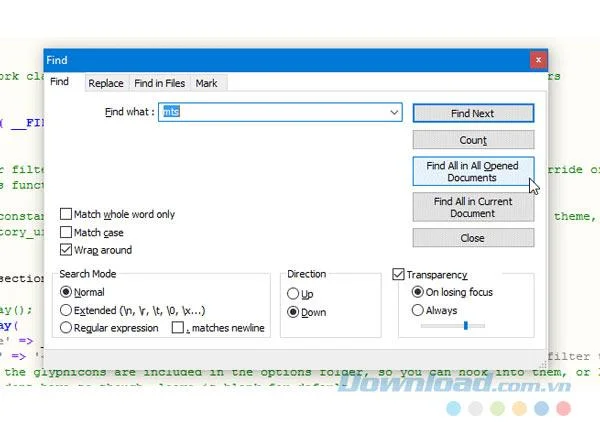
To find an error when you make a typo, you do not need to open and check each individual file, instead, you can open all files at once (same as above), press Ctrl + F and select the Find tab .
Enter your search term in the empty box and click Find All in All Opened Documents . Search results will be displayed at the end of Notepad ++, then you just need to go to the display file and correct the errors.
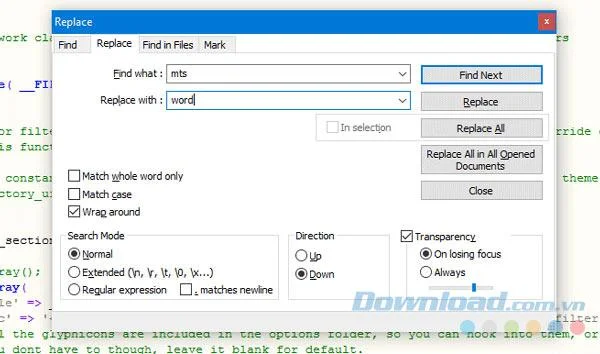
In case you want to replace a specific word or paragraph in multiple files, you just need to open all the files you need to perform, press Ctrl + H , type the word you want to replace in the Find what box , then enter the word you need. replace replace with , and then click replace All in All Opened Documents .
To save all the files that have been replaced at once, press Ctrl + Shift + S.
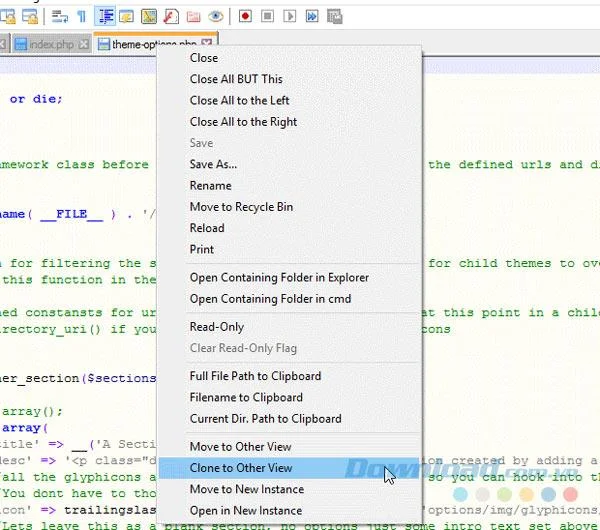
Assuming you have to work in a fairly long file and don't want to constantly scroll your mouse to check different areas, you can:
If you often press the wrong button, this is a solution to help you edit a specific file or create anti-modifying files when you put those two files side by side. To do so, click on the tab of the file, then select Read Only.
Notepad ++ is a simple, easy-to-use programming toolkit, even for beginners. Hopefully through the article above you will understand more about this software and the useful features that it provides for us to perform our work most effectively.
I wish you successful implementation!
Plan a recognizable Halloween 2026 look with pop culture costumes inspired by Spider-Man, Supergirl, Toy Story 5, Moana, Mario, and Wednesday.
Sort leftover Halloween candy safely, share or repurpose sealed treats, and choose food use or compost for pumpkins based on their condition.
Compare workplace Halloween costume choices by respect, dress code, mobility, and safety—and learn when a subtle accessory or a policy check is the better option.
Find a couples costume that fits your style, budget, and comfort level, from Addams Family classics to original inside-joke duos.
Need a last-minute high school Halloween costume? Compare 10 easy closet-based ideas by prep time, comfort, school-day practicality, and simple safety checks.
Use a simple 2026 Halloween decorating timeline for indoor décor, outdoor displays, and fresh pumpkins, with practical adjustments for weather and events.
Mix five vivid, approachable Halloween cocktails with measured recipes, simple prep tips, and an alcohol-free option for your party guests.
Find 15 office-friendly Halloween costume ideas for 2026, with practical checks for dress codes, respectful themes, comfort, and workplace safety.
Plan a fun elementary school Halloween party with easy crafts, games, inclusive treats, costume tips, and a sample 75-minute classroom schedule.
Compare realistic side hustles for 2026 by startup cost, fees, flexibility, and income control, with current tax and scam guidance from official sources.