Home
» PC Tips
»
6 Reasons Microsoft Should Keep the Local Account Option in Windows 11
6 Reasons Microsoft Should Keep the Local Account Option in Windows 11
In Windows 11, Microsoft is making it harder to bypass the Internet and Microsoft account requirements during setup, preventing users from creating local accounts. This is a mistake, many people think.
This change was implemented with Windows 11 build 26120.3653 and build 26200.5516, where Microsoft removed the "BypassNRO.cmd" script, a previous workaround that allowed users to bypass these requirements.
According to Microsoft, this decision is aimed at enhancing security and improving the user experience. However, as expected, users quickly began to express their frustration with this change.
It's no secret that Microsoft loves having users set up their PCs with a Microsoft account. Not only does this approach seamlessly integrate with the company's online services and apps, it also translates into lucrative monetization opportunities.
Microsoft accounts enable key features like syncing files and settings across multiple devices, parental controls, and tracking a device if it's lost or stolen. Additionally, starting with Windows 11 24H2, the system now automatically enables device encryption during setup, storing the recovery key in the associated Microsoft account.
Despite these benefits, Microsoft should keep the option to create a local account, especially during setup. There are a few important reasons why limiting this option is a step in the wrong direction.
The first reason is privacy. Local accounts operate independently of Microsoft's cloud services, ensuring that personal data remains locally on your computer.
This approach minimizes data sharing with external servers, addressing concerns about data collection and user tracking. However, the company still collects telemetry data regardless of what type of account is configured on the device.
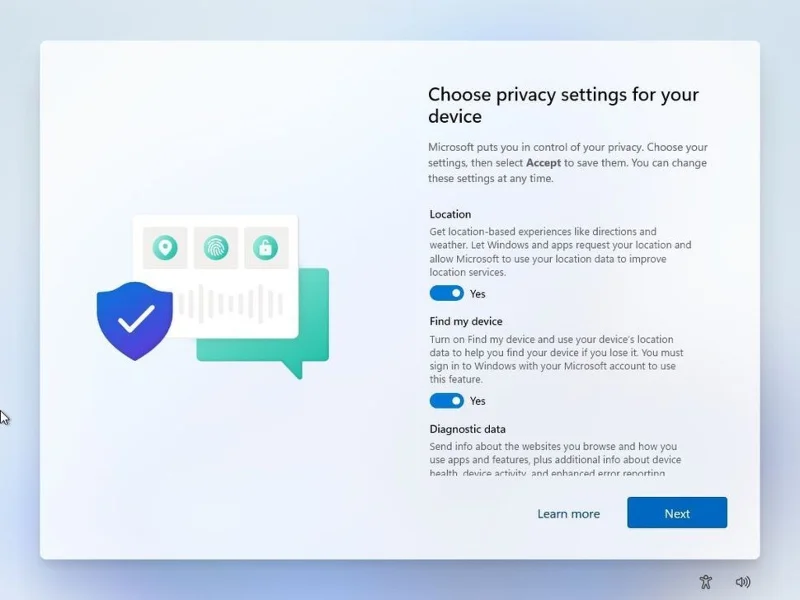
Easy setup
Windows 11 OOBE Local Accounts
When using a local account, you do not need to be connected to the Internet to complete the initial configuration and the number of steps is significantly reduced.
Currently, on Windows 11 Home and Pro , you must have your computer connected to the Internet . Otherwise, you cannot complete the initial setup without using workarounds, which means you will have to go to another physical location and use your Microsoft account to complete the setup.
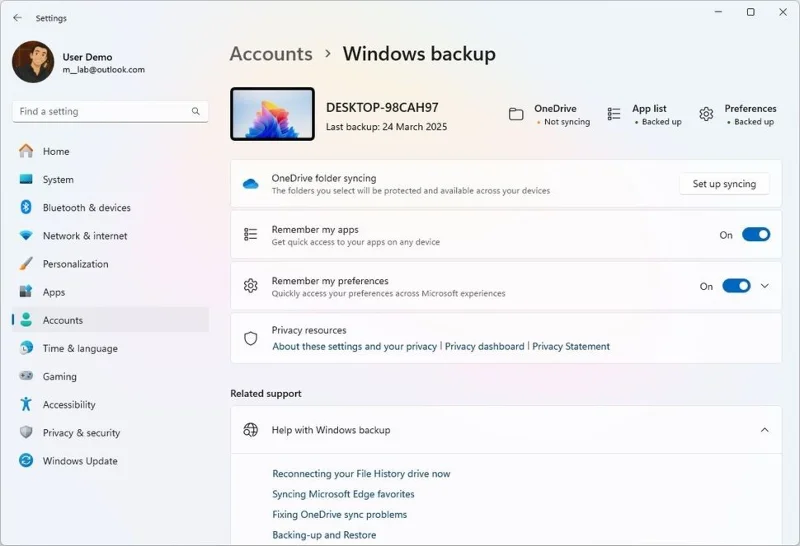
Simple management
Windows 11 MSA Backup
For systems that do not require synchronization across multiple devices, local accounts provide simple setup without the additional configuration associated with online accounts.
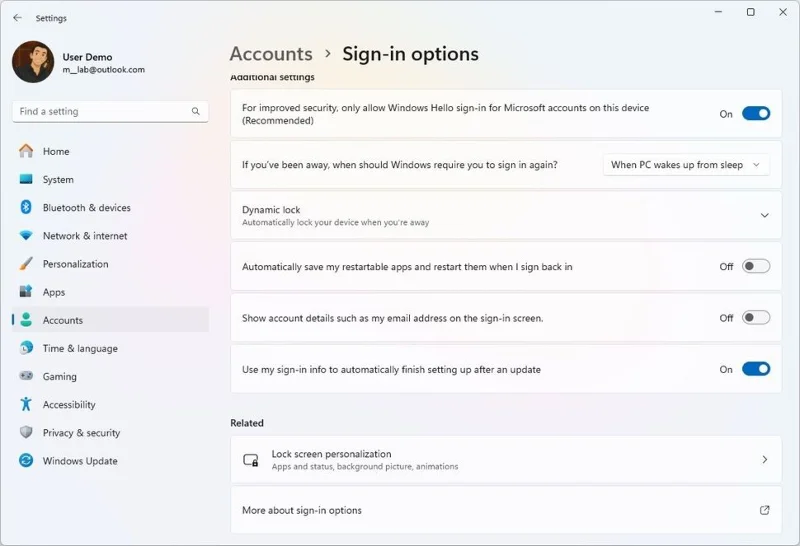
Unlimited account access
Windows Hello sign-in options
Local accounts work without an Internet connection, allowing users to access systems and perform tasks without being online. This is especially beneficial in environments with limited or no Internet connectivity.
It's important to note that computers configured with a Microsoft account can be accessed, but only with a PIN. If the device is not connected to a network, you won't be able to log in with your password.
Better profile configuration
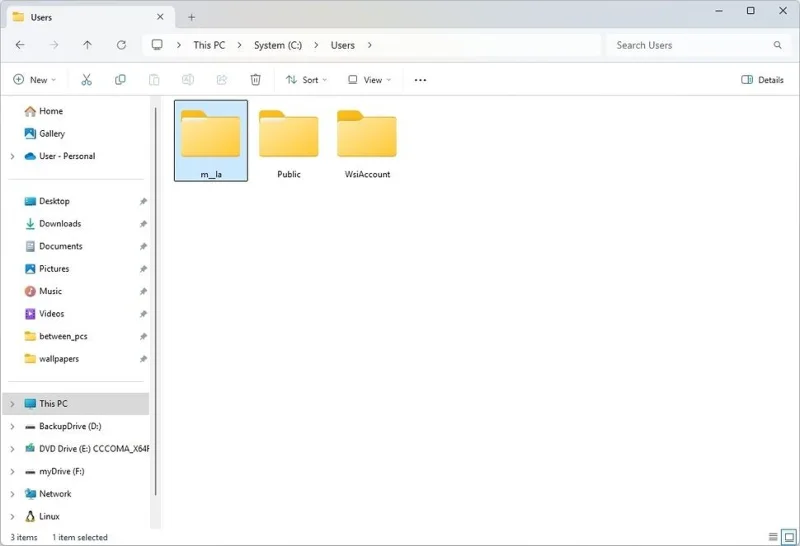
Windows 11 account folder
By default, the system uses the first 5 letters of the email address from the Microsoft account to create the profile folder, which can help randomize the name to avoid conflicts when creating multiple accounts, but the end result is a folder name that doesn't make much sense.
On the main computer, people often create a local account during setup because it allows them to create more meaningful folder names, and then link that account to their Microsoft account.
Better Remote Desktop
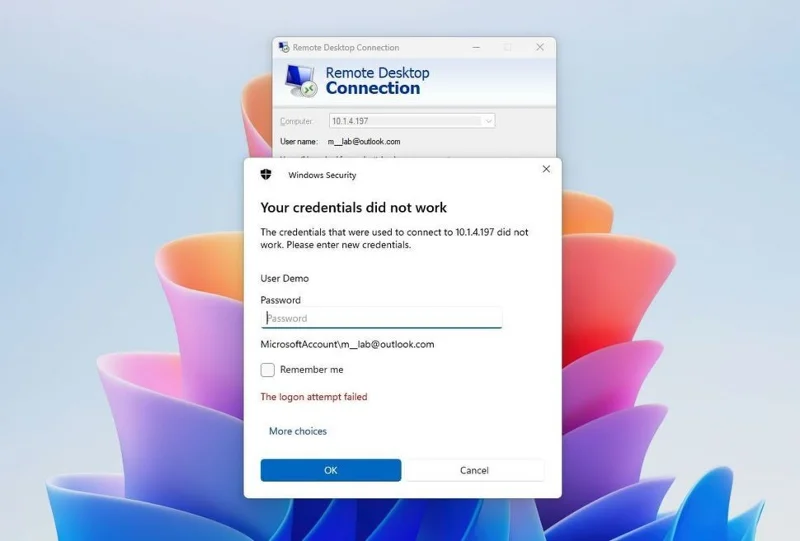
Remote Desktop Windows 11 MSA Issues
Finally, another reason why Microsoft should never remove the option to create a local account is to avoid Remote Desktop connection issues.
Currently, if you use a Microsoft account and want to set up a remote connection, you will be able to connect, but not be able to sign in. In this case, you will have to disable the Windows Hello option , then sign out and sign back in to your account with your password, and only then will you be able to authenticate using Remote Desktop.
If you have a local account, you can set up a Remote Desktop connection without any problems using your password.
Users should have the right to decide
Microsoft should restore the option to set up the operating system in Out-of-box Experience (OOBE) without a workaround and let people decide, as this tactic seems unfair to users.
It's important to note that the option to create a local account is still available from the desktop experience, but it wouldn't be surprising if this type of account disappeared in future OS releases, at least for Home editions.
You can always bypass the Microsoft account requirement during the initial setup without using other workarounds by setting up your device with a Microsoft account, then creating a local account from the Settings app, switching to the new account, and deleting the profile with the Microsoft account.
Alternatively, you can do a clean install using a custom USB to bypass online accounts and other requirements. Or in the Out-of-box Experience, you can use the Shift + F10 shortcut to open a Command Prompt and run the start ms-cxh:localonly command to bring up the old account manager to create a local account, skipping most of the extra steps.