Pardus 23 APT Errors: Check DNS and the yirmiuc Repositories
Diagnose Pardus 23 APT connection failures, confirm the official yirmiuc sources, and restore apt update without bypassing package signature checks.
Night Light on Windows 11 is a handy feature if you often use your computer at night, but it's not the best implementation of the feature. Many people use the free f.lux instead of Night Light on Windows 11; here's why.
1. f.lux has more customization options
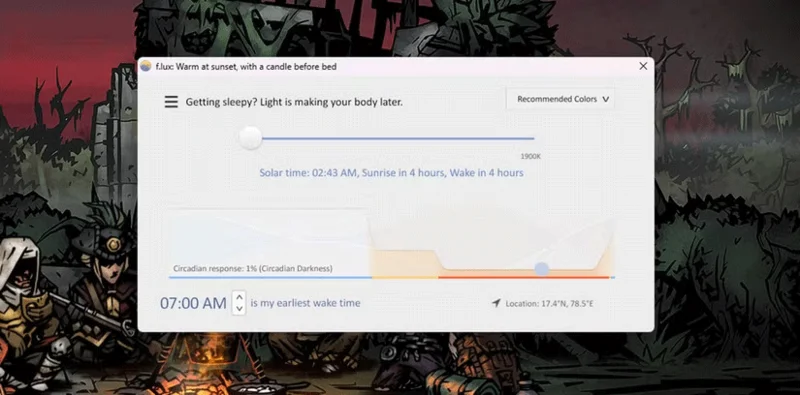
The most common argument in favor of f.lux over Night Light is that f.lux has far more customization options than the native Windows implementation. You can change everything from the color temperature of your display to exactly when the color temperature changes and how often.
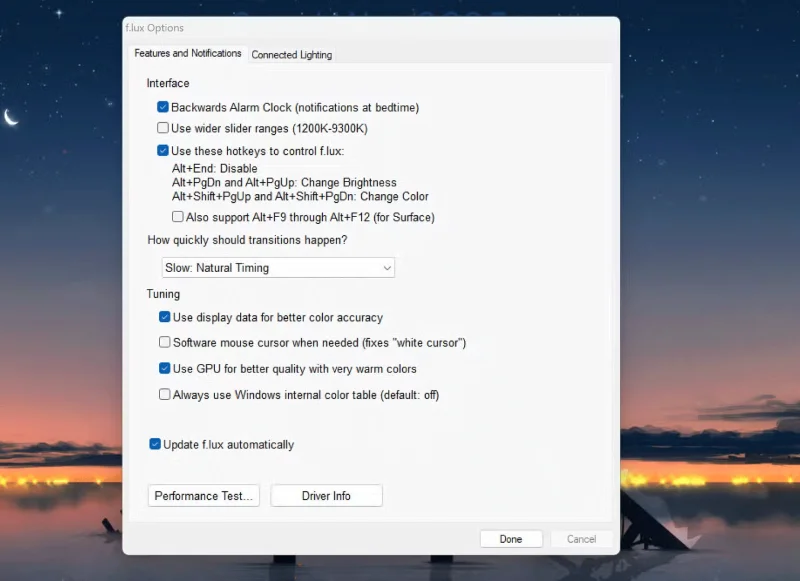
To be fair, the Windows implementation lets you set the intensity and schedule for Night Light to turn on, but f.lux takes it to the next level. You can choose presets for when the color temperature changes, like when you’re working late or want to reduce eye strain.
Instead of just syncing with the sunrise and sunset at your location, f.lux lets you choose when you wake up to start using your computer and adjusts the color temperature accordingly. There are a lot of options for choosing the color temperature. With a little tweaking, you can get the most out of F.lux and protect yourself from blue light.
2. Night Light may interrupt full-screen apps
Many people have had bad experiences with Night Light and games—or more specifically, full-screen apps in general. The Windows implementation changes the screen color regardless of what you’re doing. So if you’re playing a game or watching a movie at night, your screen will inevitably turn yellow.
Many people have seen annoying behavior from Night Light with full screen apps. Sometimes games will run fine. Other times there will be a yellow tint on the screen and Night Light has to be turned off manually for it to go away.
However, f.lux handles full-screen apps much better. If you have a dual-monitor setup, f.lux will reset the color temperature on your primary monitor whenever a full-screen game or program is running. Meanwhile, f.lux maintains its colors on the second monitor—something the Windows feature doesn’t do.
3. F.lux is more consistent
Adding to the previous point, f.lux is much more consistent in managing the color temperature of your desktop. Sometimes, if you shut down your PC with Night Light enabled, you may still find it enabled when you restart your computer, even in the morning.
The Windows feature also kicks in quite abruptly, simply changing the color temperature of your screen at the exact minute the sun sets. This change is extremely harsh on the eyes, compared to the smooth transition that f.lux provides. As the sun sets or rises, f.lux gradually changes the color temperature, so you don't even notice the change.
There are far fewer crashes, bugs, and glitches when using f.lux. Plus, it includes shortcuts to turn off services, change brightness, or adjust color temperature on the fly. So even if the program displays the wrong colors or doesn't switch automatically, you don't have to dig through menus.
4. F.lux can also control smart bulbs
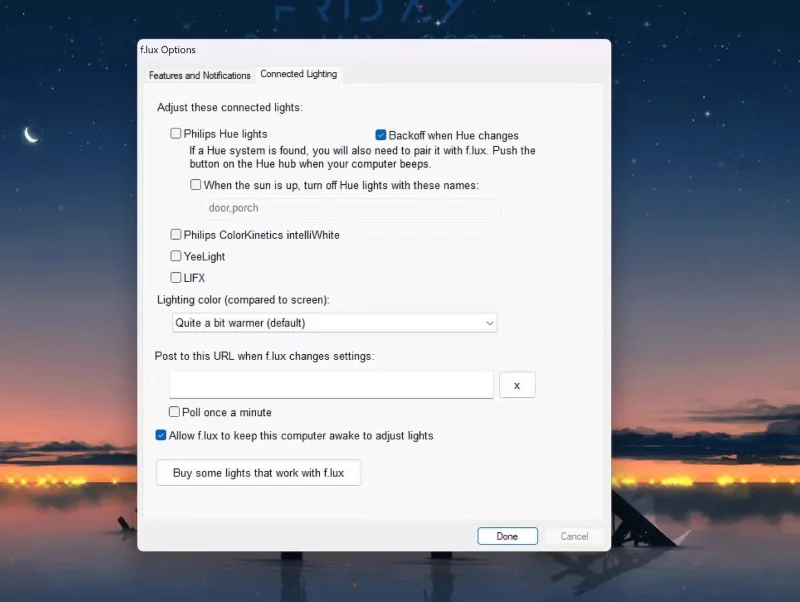
Finally, F.lux comes with a ton of extra features that you won’t find in Night Light. This includes the ability to sync your Phillips Hue smart bulbs with your desktop’s color temperature, allowing for seamless transitions between day and night lighting.
You'll find these settings under the Connected Lighting tab in f.lux's preferences. You can set the light color based on your desktop and even choose which lights turn off when it's morning. This feature also works with Philips Color Kinetics intelliWhite, YeeLight, and LIFX lights.
Overall, f.lux is a free, easy-to-use, lightweight program that can be useful if you use your computer all the time at night. Changing the color temperature of your computer can also help you sleep better – the blue light our computers emit is not good for sleep, especially when you’re staring at a screen at 3am.
Diagnose Pardus 23 APT connection failures, confirm the official yirmiuc sources, and restore apt update without bypassing package signature checks.
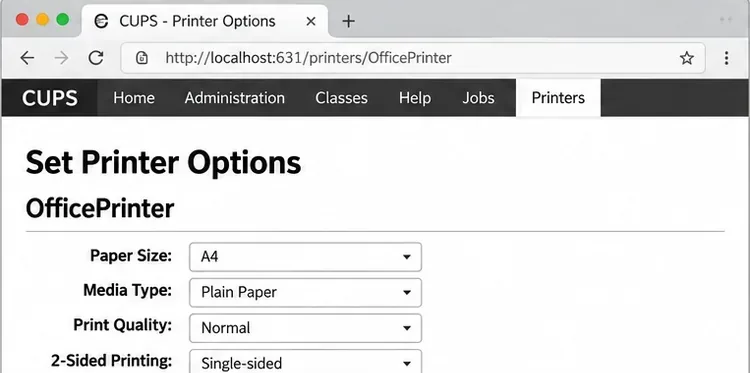
Configure printers on Harmonica OS using CUPS, compare driverless IPP with legacy drivers, and verify USB or network printing with a test page.
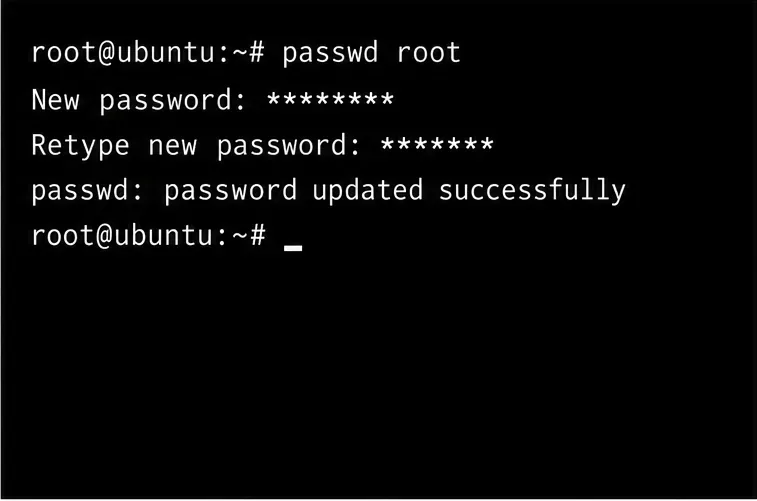
Use a recovery shell to set a new Harmonica OS root password, with checks for encrypted disks, read-only filesystems, and accounts that use sudo.
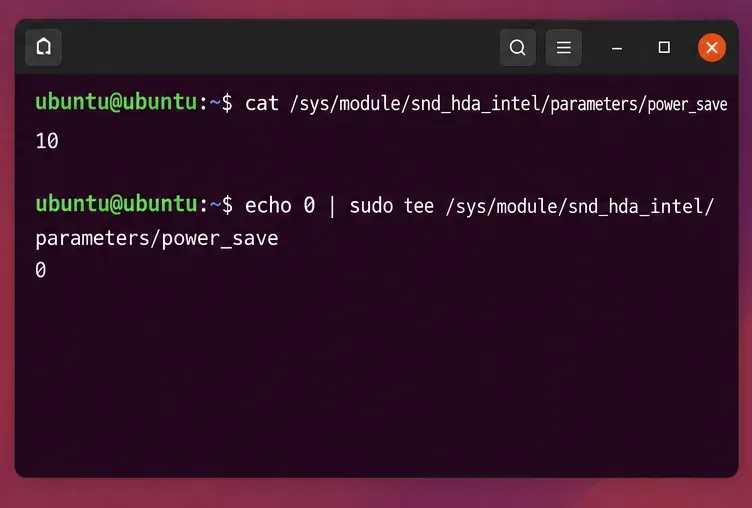
Trace whether clipping, ALSA format conversion, or HDA power saving is causing Ubuntu 24.04 audio distortion, then apply the matching reversible fix.
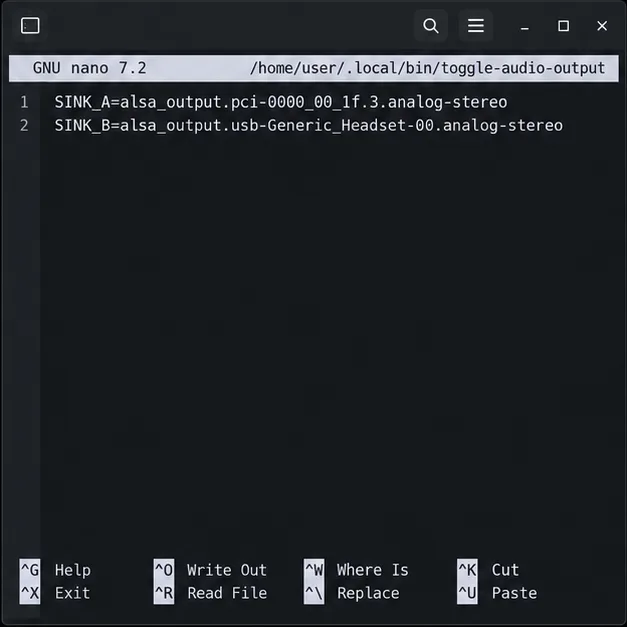
Switch Debian audio between named PipeWire outputs with a pactl script that updates the default sink and reroutes streams already playing.
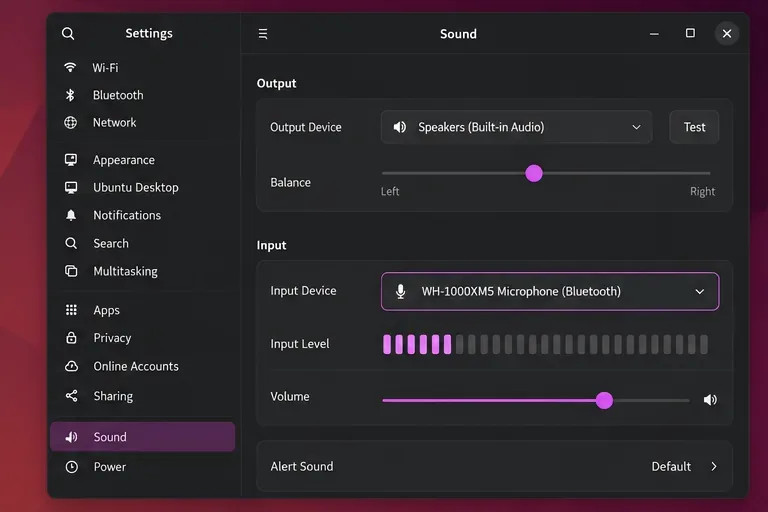
Get your Bluetooth headset mic working by selecting the right input, using a hands-free audio profile, and checking Ubuntu’s PipeWire route.
Learn why Flatpak apps may ignore Ubuntu 24.04 GTK themes and follow safe steps to check theme extensions, refresh Flatpak apps, and diagnose portal issues.
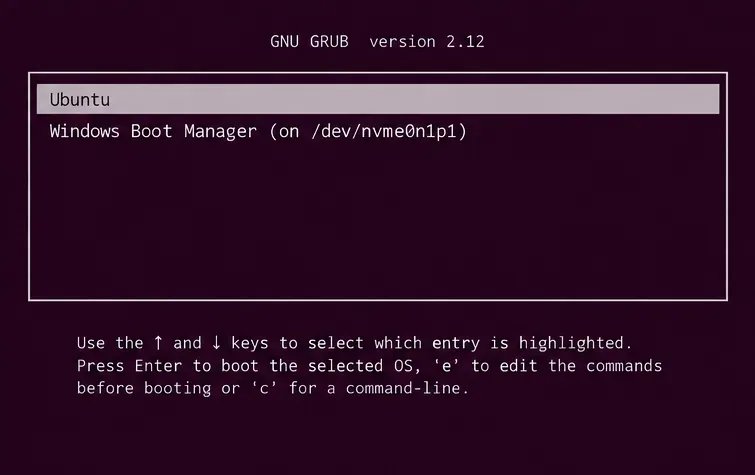
Install Ubuntu 24.04 alongside Windows 11 with BitLocker safely. Compare separate-drive and shared-drive paths, recovery keys, partitioning, and boot checks.
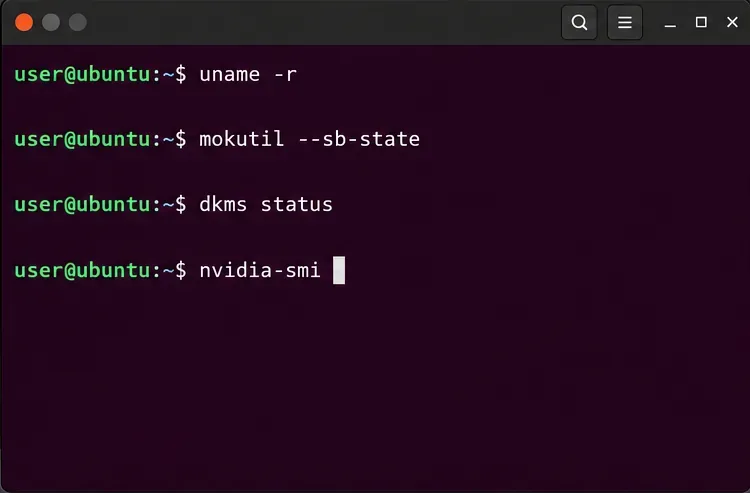
Diagnose NVIDIA driver failures after an Ubuntu kernel update. Check DKMS and Secure Boot, rebuild the matching module, enroll a MOK, and verify the fix.
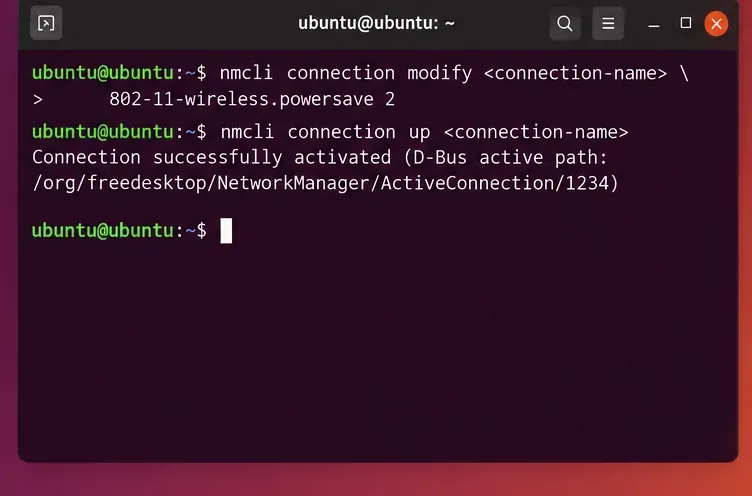
Fix Ubuntu 24.04 Wi-Fi drops after suspend with checks for NetworkManager, radio blocks, updates, power saving, and drivers—then verify each resume.