According to PCWorld, during the installation process, the Windows 11 24H2 update created a huge cache folder weighing nearly 10GB that users could not delete.
Windows always creates a cache when installing Windows updates, so the existence of the cache is not a problem. It is considered a temporary storage for installation files. However, after applying the Windows 11 24H2 update, this cache cannot be deleted.
According to Windows Latest, users have tried to delete the cache through Control Panel but failed, it is still on the computer. Many people have also applied many other methods to delete the Windows update cache but failed. Currently, to delete this folder, users only have the only option left is to install a completely new version of Windows.
Microsoft is now aware of this bug. A patch will be deployed as part of an upcoming update to address the issue.
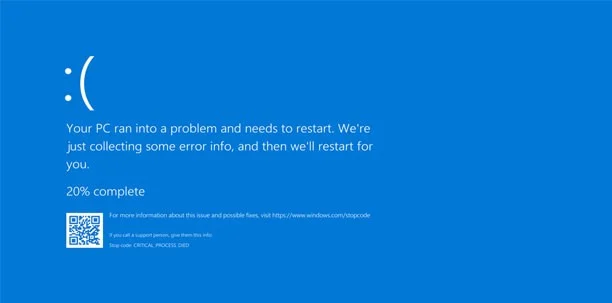
This isn't the only bug that's been reported in the Windows 11 24H2 update. Previously, the update was also reported to cause "blue screen of death" (BSOD). Another bug that's been reported in Windows 11 24H2 is the mouse cursor disappearing in text input fields in Google Chrome, Microsoft Edge, Slack, Spotify, and several other Chromium-based apps.
New Windows 11 update causes computer to restart continuously
Microsoft has issued a warning to Windows 11 users that the KB5043145 update may cause some computers to restart repeatedly or become unresponsive.
A crashed computer will display a blue or green error, sometimes with the Windows Automatic Repair tool or BitLocker recovery.
The blue screen of death error is always a nightmare for many Windows users.
The extent of the impact and the cause of the problem are still unknown. Microsoft said the company is investigating and will provide updates to users when more information is available.
According to ZDNet, the issue of computers running the new Windows 11 update constantly rebooting only affects a select group of users. Microsoft has clarified that the affected systems are Windows 11 22H2: Enterprise and Education and Windows 11 23H2.
BitLocker encryption is only available on Windows 11 Pro, Windows 11 Enterprise, and Windows 11 Education, so it's likely that Windows 11 Home users will be safe from the issue.
KB5043145 is an optional update, released to refine some features and fix bugs, so users will not be forced to install it. If you have installed it and are having problems, you can uninstall this update to fix it by going to Settings - Windows Update - Update history, then clicking Uninstall Updates at the bottom, finding KB5043145 and clicking Uninstall.