Home
» PC Tips
»
How to turn off spell check in Windows 10?
How to turn off spell check in Windows 10?
Windows 10, as well as the Microsoft Office suite, now has the function of automatically correcting spelling and grammar errors when users type in the system. But for many people, this is an annoying and unnecessary feature. So how to disable this automatic spelling check feature?
How to turn off Windows 10 spell check in Settings
Step 1: First, we will open the Windows Settings window interface by clicking on the Start menu and then clicking on the gear icon .
Or you can use the key combination Windows+ I.
Click the Settings icon in the Start Menu
Step 2: In the Windows Settings interface , continue to click on Devices to set up changes.
Click Devices in Windows Settings
Step 3: Under Devices, click on Typing from the left pane, then click on the Manage known networks link.
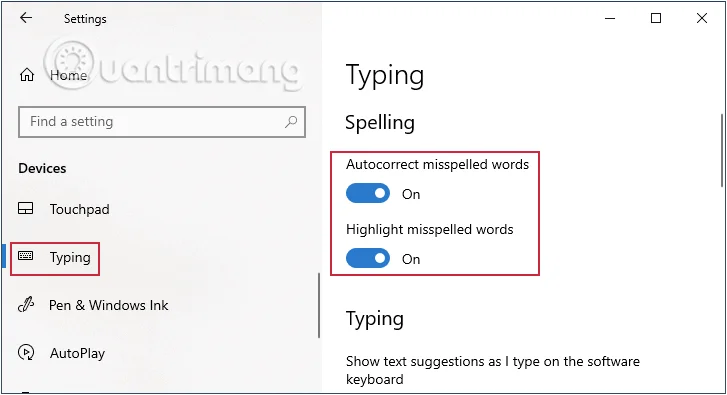
Here, we will see that there are 2 options Autocorrect misspelled words and Highlight misspelled words in ON mode .
Select Typing from the left window
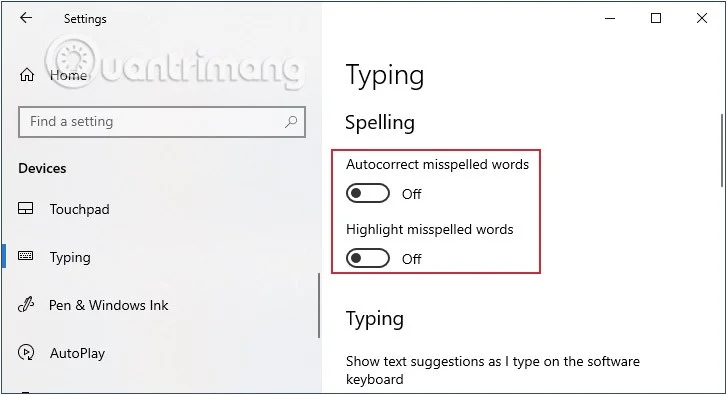
Step 4: Switch the above two items to OFF and Windows 10 will turn off the automatic spell checking feature.
Turn Autocorrect misspelled words and Highlight misspelled words to OFF
How to turn off spell check completely
1. Press Windows key + R and type the following and press Enter :
C:\Windows\System32
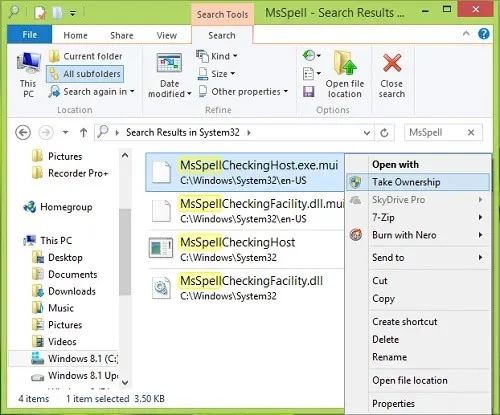
2. In the opened System32 folder , type MsSpell in the search box and press Enter. This will result in up to 4 files as shown below. You need to take ownership of these 4 files.
4 files related to completely disabling spell checking
3. Once you have taken ownership, rename these files to something you can remember.
For example, rename MsSpellCheckingHost to MsSpellCheckingHost_old.
After renaming these 4 files, restart your computer, now you have successfully disabled spell checking and autocorrect.
In the future, if you ever want to restore or re-enable autocorrect, simply rename these files to their original names and enable both options in Windows Settings.
How to turn off spell checking using Group Policy
To turn off spell checking using Group Policy, follow these steps:
User Configuration > Administrative Templates > Control Panel > Regional and Language Options
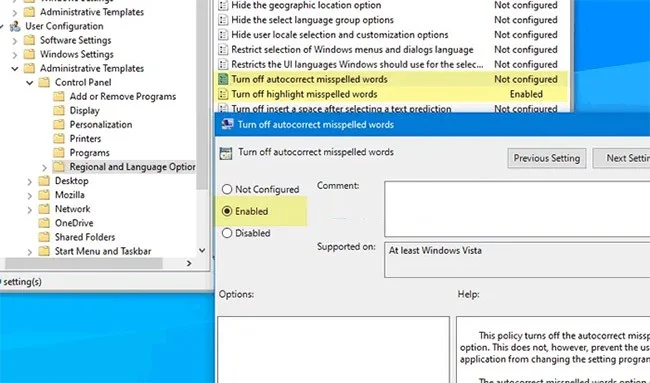
Here you can find two settings named Turn off autocorrect misspelled words and Turn off highlight misspelled words . Double click on each one and select the Enabled option .
Enable 2 options Turn off autocorrect misspelled words and Turn off highlight misspelled words
Click the OK button to save changes.
Suppose you want to enable spell checking again. In that case, you need to open the same setting in Local Group Policy Editor , select the Not Configured option and click the OK button.
How to turn off spell check using Registry
To turn off spell checking using the Registry, follow these steps:
First, press Win + R , type regedit , press Enter button and select Yes option to open Registry Editor on your computer. Then, navigate to this path:
HKEY_CURRENT_USER\SOFTWARE\Policies\Microsoft
Right-click the Microsoft key , select New > Key , and name it Control Panel. Next, right-click the Control Panel key , select New > Key , and name it International.
Create International key
Then you have to create a REG_DOWRD value in the International key.
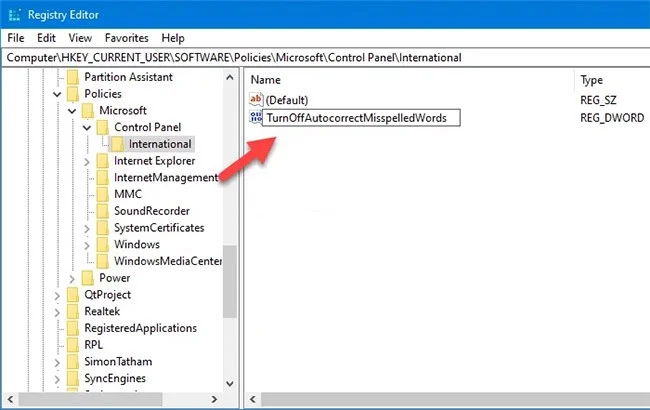
To do that, right-click on it, select New > DWORD (32-bit) Value , and name it TurnOffAutocorrectMisspelledWords.
Create key TurnOffAutocorrectMisspelledWords
Follow the same steps to create another REG_DWORD value named TurnOffHighlightMisspelledWords.
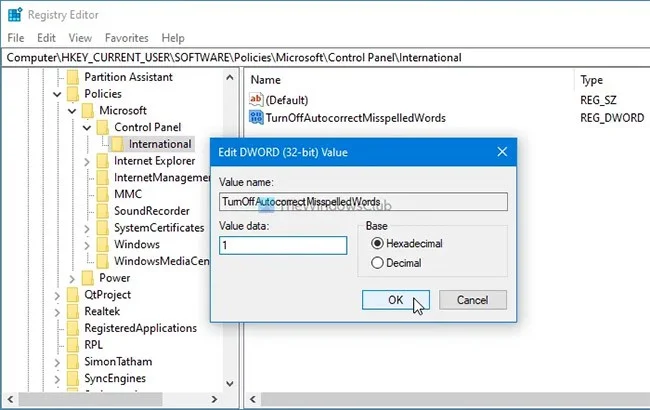
Now double click on each key to set their Value data to 1 .
Set Value data to 1
Click the OK button to save changes.
If you want to re-enable them, open the same REG_DWORD values, enter Value data as 0 and click OK button to save changes.