
5 Halloween Cocktails That Are Easy to Serve at Your 2026 Bash

Mix five vivid, approachable Halloween cocktails with measured recipes, simple prep tips, and an alcohol-free option for your party guests.
Many people used to find resizing images a pain until they learned about Adobe Photoshop ’s simple channel-based protection method . Now, you can resize an image without stretching or distorting it, making the process much simpler.
The smart way to resize without stretching
Photoshop's solution is Content-Aware Scale. This tool intelligently stretches (or squishes) the background while still protecting your main subject.
There are many times when you need to change the aspect ratio of an image. The traditional Free Transform tool ( Ctrl + T ) stretches everything evenly, which can squash or bulge people, buildings, and other objects.
However, Content-Aware Scale is smart and customizable. It helps you adjust the layout and orientation. You can use the controls to change the image proportions by dragging the image or protect objects like people and buildings from deformation using the alpha channel.
Note : You may wonder about using Generative Expand to make an image larger. Generative Expand tends to handle complex scenes better than Content-Aware Scale, but both tools serve different needs.
Use Content-Aware Scale to Preserve Objects
This method works best for images with clear foreground/background separation and uncluttered backgrounds. For example, simple backgrounds like a beach, wall, or curtain are ideal.
Choose one of the two content-based scaling methods depending on the nature of your image. Start by opening an image in Photoshop and converting it to a layer in the Layers panel.
Method 1: Change the ratio directly quickly and simply
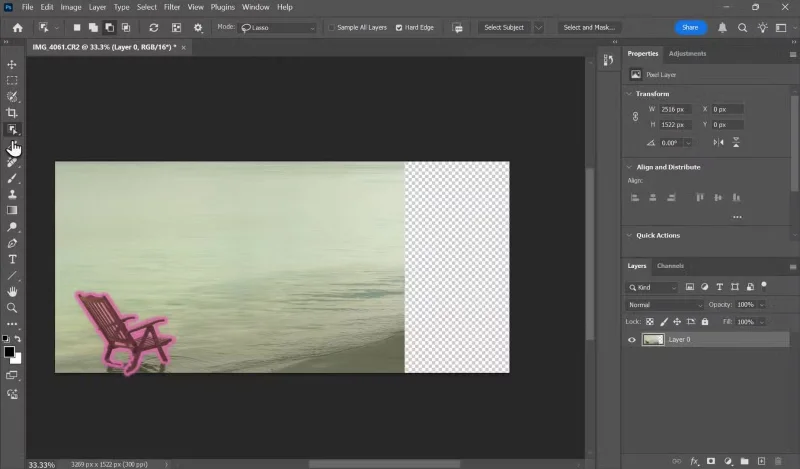
Start by using the Crop tool to expand the canvas so that the background has enough room to stretch.
With the layer selected, go to Edit > Content-Aware Scale . Photoshop places a bounding box around the image with the reference point at the center of the object. This is the fixed point around which the image is scaled.
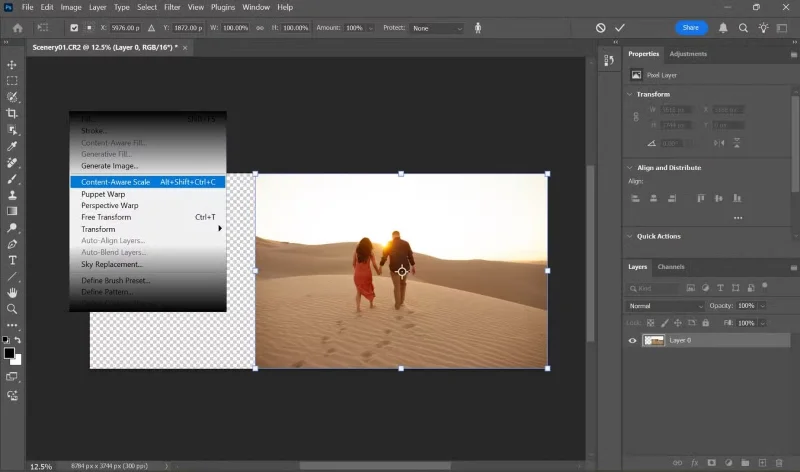
Drag a handle on the bounding box to scale the image in the desired direction. Note that only the background stretches while your subject retains its original proportions. Press Enter to complete the edit.
Tip : Work with high resolution images for best results and make incremental adjustments rather than over-stretching.
Method 2: Protect the subject with the Alpha channel
Photoshop Sensei does a good job of this. However, there may be some cases where the subject starts to stretch. So you have to tell Photoshop explicitly which areas to protect. Convert the image to a layer and expand the canvas as above.
Choose the selection method that works best for your image (for example, the Object Selection tool or even Quick Masking). Make a selection around the subject you want to protect.
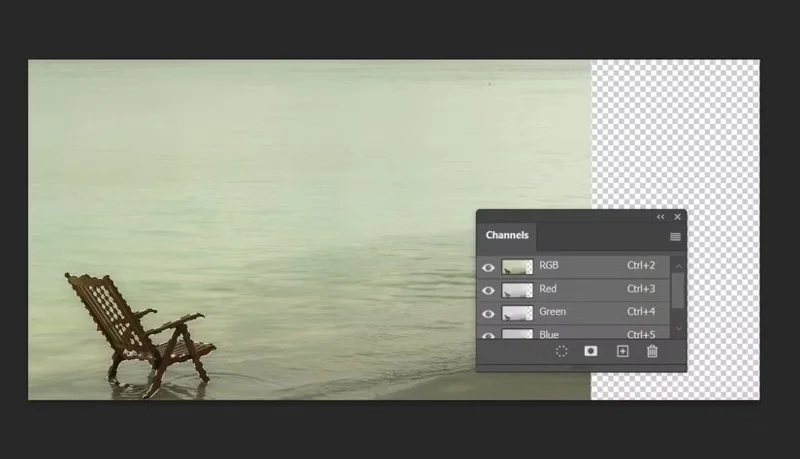
Go to the Channels panel and click Save Selection As Channel . This will create a new Alpha Channel containing only your selection. Go back to the Layers panel and deselect the subject.
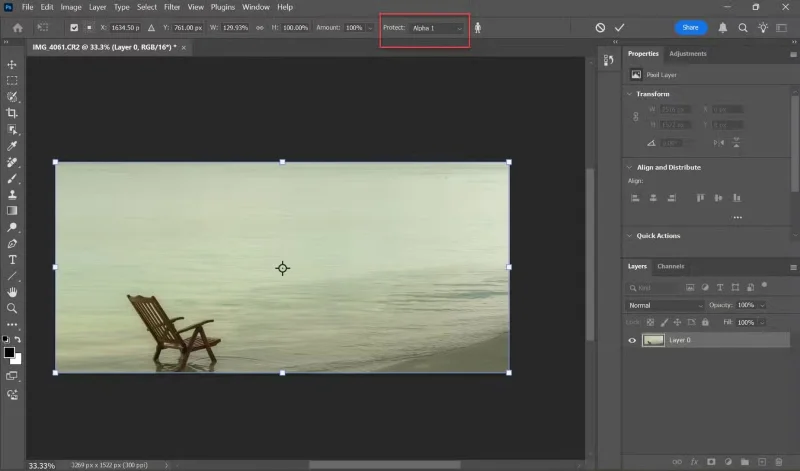
Select Edit > Content-Aware Scale . Then, go to the Options bar at the top and select the Alpha channel under Protect .
Drag the corner handles on the image to adjust the size. The background will change in the direction you drag while the protected area remains the same.
Press Enter or click the check mark button at the top to confirm the conversion.
Note : The Options bar for the Content-Aware Scale tool has several settings for fine-tuning your edits. For example, you can change the fixed reference point around which the image will scale. For simple image resizing, the default values work fine.
Tips for best results
Whether you're resizing a PowerPoint slide or improving a layout, these other Photoshop tips are helpful.
Open an image and start experimenting. The Content-Aware Scale tool is a handy fallback when you want to include an image in a presentation, Instagram layout, or target the “ Rule of Thirds ” for photo composition.
See also:
Mix five vivid, approachable Halloween cocktails with measured recipes, simple prep tips, and an alcohol-free option for your party guests.
Find 15 office-friendly Halloween costume ideas for 2026, with practical checks for dress codes, respectful themes, comfort, and workplace safety.
Plan a fun elementary school Halloween party with easy crafts, games, inclusive treats, costume tips, and a sample 75-minute classroom schedule.
Compare realistic side hustles for 2026 by startup cost, fees, flexibility, and income control, with current tax and scam guidance from official sources.
Upgrade your home office ergonomics with current OSHA and NIOSH guidance on chair fit, monitor height, laptop setup, lighting, and movement.
Learn why emotional intelligence matters in leadership, where it helps most, how to strengthen it, and how to tell whether your approach is working.
A practical roadmap for moving into tech without a degree: choose an accessible role, build job-ready skills, prove them with projects, and use hiring feedback to improve.
Build a credible LinkedIn personal brand in 2026 with current profile, content, newsletter, analytics, verification, and visibility guidance from LinkedIn.
Quiet quitting and quiet firing are catchy labels, not diagnoses. Learn what is verified, what depends on context, and what employees and managers can do next.
Fractional executives offer senior leadership without a full-time hire. Learn when the model works, what to ask, and the risks to manage.