How to create transparent images in Microsoft PowerPoint

Video How to create transparent images in Microsoft PowerPoint

Microsoft PowerPoint has a small feature in the Ribbon that you may not notice is called Set Transparent Color . This feature can erase a photo's background and turn it into a transparent photo. This tip is very useful if you want to create infographics in PowerPoint.

The Set Transparent Color feature in PowerPoint only works on inserted images, it does not work with images inside the shapes. If your image is inserted inside the Shape, the Set Transparent Color option will not light up to be selectable.

Note: The screenshot below is for Office for Mac , but you can do the same for theWindowsversion of Office .

How to set up a transparent background image in PowerPoint

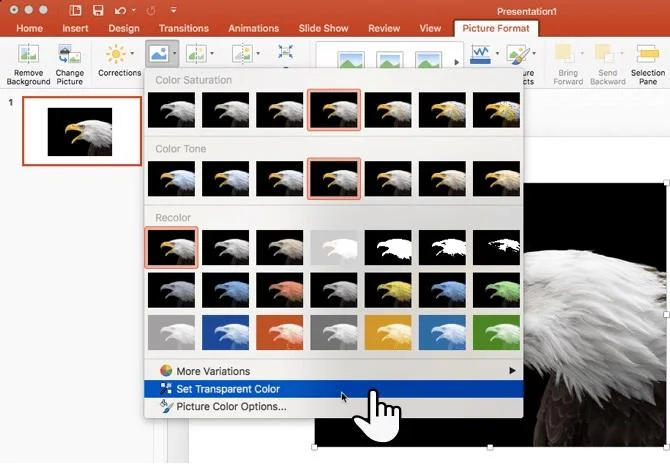
Select the image to edit, double click on it. The Picture Format property section will appear on the Ribbon.

Go to Picture Format > Color . Click the small arrow next to and select Set Transparent Color in the drop-down menu.

How to create transparent images in Microsoft PowerPoint
Create transparencies in PowerPoint 2016

At this point, the mouse cursor will change to another shape. Choose the color area in the image you want to turn transparent.

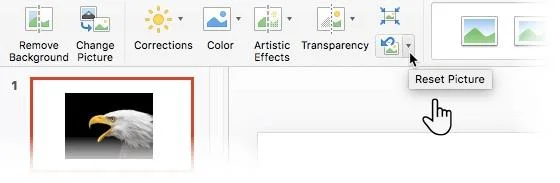
To restore the original image, simply click the Reset Picture icon in the same area.

How to create transparent images in Microsoft PowerPoint

The Set Transparent Color tool sometimes doesn't work perfectly. It is not exactly the same as the Eyedropper tool in Adobe Photoshop and you will encounter 2 problems as follows:

  • When you repeat the process of removing the next color, it removes transparency in the first selected color.
  • It will also remove the main image area if that part of the image is the same color as your chosen one without a clear partition.

You will not be able to do anything if you encounter the first problem. But the second problem is a very straightforward solution - protect the area of ​​the image that does not want to be transparent by drawing the shape area for it.

Protect image areas that do not want to be transparently transformed with Shape

Use the Freeform tool to draw an image that masks the area of ​​the image you want to keep transparent:

How to create transparent images in Microsoft PowerPoint

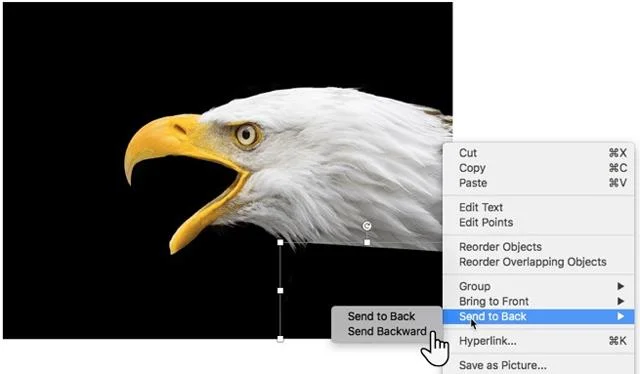
Fill this drawn Freeform area with the background color (black in this example) and move it to the back of the image but above the background. Right-click on this shape and choose Send to Back > Send Backward .

Then set the transparent color.

In older versions of PowerPoint, this Set Transparent Color feature only works on PNG and GIF images. However, you can now modify both PDF and JPEG files. And of course, the simpler the color, the better the results.

If in case you can not delete the background image in PowerPoint, then surely you need a more powerful tool, such as Photoshop for example. You can refer to the following articles to know how:
Leave a Comment

Side Hustles That Actually Pay in 2026: 7 Realistic Options and the Tradeoffs to Know

Side Hustles That Actually Pay in 2026: 7 Realistic Options and the Tradeoffs to Know

Compare realistic side hustles for 2026 by startup cost, fees, flexibility, and income control, with current tax and scam guidance from official sources.

Remote Work Ergonomics in 2026: Upgrade Your Home Office Without Overbuying

Remote Work Ergonomics in 2026: Upgrade Your Home Office Without Overbuying

Upgrade your home office ergonomics with current OSHA and NIOSH guidance on chair fit, monitor height, laptop setup, lighting, and movement.

Why Emotional Intelligence Matters in Leadership—and How to Build It

Why Emotional Intelligence Matters in Leadership—and How to Build It

Learn why emotional intelligence matters in leadership, where it helps most, how to strengthen it, and how to tell whether your approach is working.

How to Transition to a Tech Career Without a Degree: A Results-First Roadmap for 2026

How to Transition to a Tech Career Without a Degree: A Results-First Roadmap for 2026

A practical roadmap for moving into tech without a degree: choose an accessible role, build job-ready skills, prove them with projects, and use hiring feedback to improve.

Building a Personal Brand on LinkedIn in 2026: What Still Works, What Changed, and What to Ignore

Building a Personal Brand on LinkedIn in 2026: What Still Works, What Changed, and What to Ignore

Build a credible LinkedIn personal brand in 2026 with current profile, content, newsletter, analytics, verification, and visibility guidance from LinkedIn.

Quiet Quitting vs. Quiet Firing in 2026: What’s Really Changing at Work

Quiet Quitting vs. Quiet Firing in 2026: What’s Really Changing at Work

Quiet quitting and quiet firing are catchy labels, not diagnoses. Learn what is verified, what depends on context, and what employees and managers can do next.

The Rise of the Fractional Executive: When Part-Time C-Suite Leadership Makes Sense

The Rise of the Fractional Executive: When Part-Time C-Suite Leadership Makes Sense

Fractional executives offer senior leadership without a full-time hire. Learn when the model works, what to ask, and the risks to manage.

How to Negotiate a Raise During Q4 Performance Reviews: A Practical 2026 Decision Guide

How to Negotiate a Raise During Q4 Performance Reviews: A Practical 2026 Decision Guide

Prepare a stronger Q4 raise request with current wage data, timing options, compensation tradeoffs, and scripts for yes, partial, or no outcomes.

6 High-Income Skills You Can Start Learning Before 2026 Ends

6 High-Income Skills You Can Start Learning Before 2026 Ends

Choose a high-income skill you can realistically start before 2026 ends, with current pay data, learning priorities, and a practical self-check.

Mastering the Hybrid Work Schedule: A Practical Framework That Actually Holds Up

Mastering the Hybrid Work Schedule: A Practical Framework That Actually Holds Up

Build a hybrid work schedule around tasks, team overlap, and measurable outcomes. See sample patterns, warning signs, and when to adjust your plan.